As antique dealers, we have a deep appreciation for the history and craftsmanship behind every item that we are asked to evaluate. However, we are currently seeing silver prices reach such high levels that many beautiful antique pieces are unfortunately being destroyed and melted down. It is a tough reality of the current market: when the value of the raw metal exceeds what a collector is willing to pay, the furnace often becomes the destination.
If you are looking through your own collection or an inheritance, here is a guide to understanding which pieces are likely headed for the melt and which ones are worth saving.
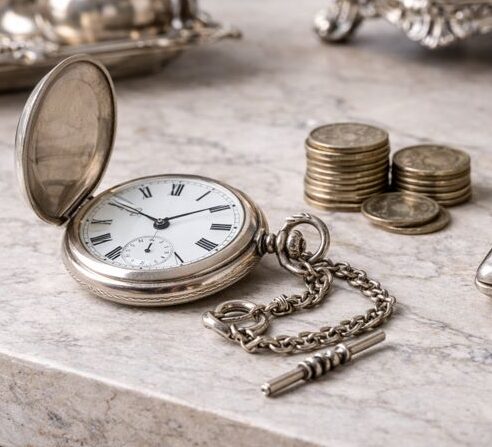
When the Metal Value Wins
The biggest factor in the decision to melt is weight. When a piece is exceptionally heavy, its “scrap” value can quickly outpace its value as an antique.
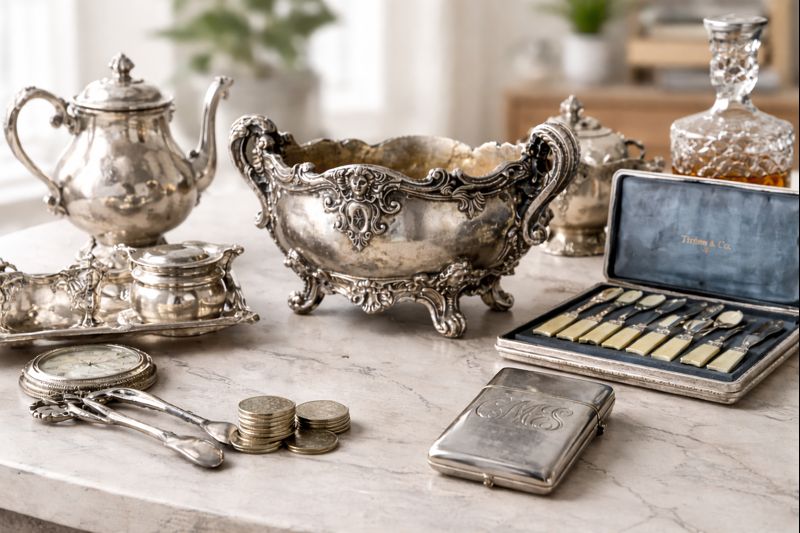
- Heavy Sterling Silver Centerpieces: For example, a large Mexican silver centerpiece can contain over $2,000 in raw metal, making it a primary candidate for melting.
- Obsolete Items: Even beautiful items like antique cigar or cigarette holders are struggling. With fewer smokers today, a holder with $400 worth of silver often has more value as metal than as a functional antique.
- The Problem with Initials: Even a prestigious name like Tiffany isn’t always enough to save a piece if it has been monogrammed. Personal initials make it much harder to find a buyer, often pushing these items toward the melt pile.
The $6,000 Flatware Dilemma
One of the toughest calls involves large flatware sets. A Tiffany sterling silver service for 12 can be worth $6,000 or more in metal value today. Because these sets often feature monograms, they are frequently melted down. If you are handling an estate, it might be kinder to offer a family member the $6,000 cash value rather than telling them a cherished family heirloom is being melted, as that can often hurt feelings.
What Gets Spared? The Exceptions to the Rule
Not everything is destined for the melting pot. We look for specific markers that indicate a piece is worth more than its weight:
- Russian Silver Enamel: If you see an “84” hallmark, you likely have 19th-century Russian silver. These pieces might only have $45 in silver weight but can be worth hundreds of dollars to the right collector.
- Lightweight Treasures: If a piece is light—perhaps only half an ounce of silver—but has a high resale value of $100 to $200, it is always better to keep and sell it as an antique.
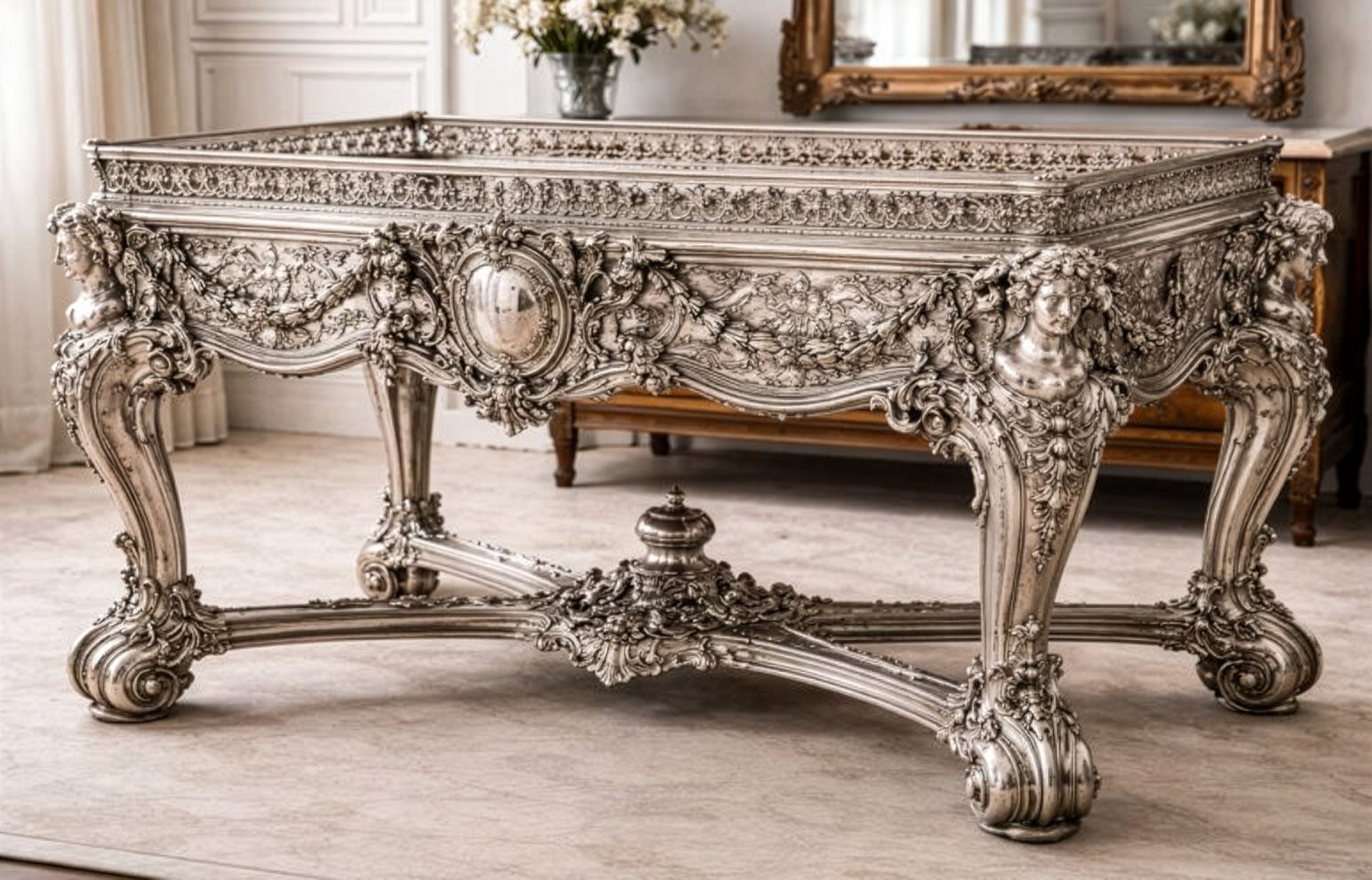
- High-End Names & Massive Scale: There is still a premium market for exceptionally large centerpieces (double or triple the standard size) because some collectors specifically want “to go really big”. Additionally, prestigious names like Buccellati or Georg Jensen can still command premiums, though the market is currently shifting toward more modern, less ornate styles.
Final Thoughts
We don’t love melting these historical items; we are antique dealers first and foremost. But with silver prices as high as they are, it is increasingly difficult to sell many pieces for a premium over their material value.
Before you decide what to do with your silver, check the hallmarks and weigh your items—you might be sitting on a significant amount of metal value, or a rare treasure that deserves to be preserved.
Watch this video for more examples of what silver gets melted and what gets spared.
FAQs
- Why is so much antique silver being melted down?
Silver prices are currently so high that the raw metal value of heavy items often exceeds what a collector is willing to pay for the piece as an antique. - Is Tiffany silver safe from being melted?
Not always. While prestigious, heavy Tiffany items—especially monogrammed flatware sets—are often melted because their silver weight can be worth $6,000 or more, which is often higher than their resale value. - What silver hallmarks should I look for?
Look for the “84” hallmark, which identifies 19th-century Russian silver. These pieces are often worth hundreds of dollars as antiques, even if they have very little silver weight. - Which items are most likely to be sold as scrap?
Heavy items like Mexican silver centerpieces and obsolete items like silver cigarette holders are primary candidates for melting because their metal value is so high. - Are there any heavy pieces that are still worth keeping?
Yes. Exceptionally large centerpieces (double or triple the standard size) and items from high-end makers like Buccellati or Georg Jensen may still command a premium above their silver weight.