Unlocking the Value in Pocket Change
Most of us have stumbled upon an old coin in a jar or piece of furniture and wondered if it was worth anything. While most are just pocket change, some coins, often dismissed by their common name, hold surprising value. This is the world of “junk silver,” a term for common pre-1965* US coins that are anything but junk. Let’s uncover a few surprising facts and stories hidden within these everyday artifacts.
*Pre-1965 refers to coins that were minted up until and including 1964 and excluding 1965 forward.
1. The Name is Deceiving: “Junk Silver” Can Be a Goldmine
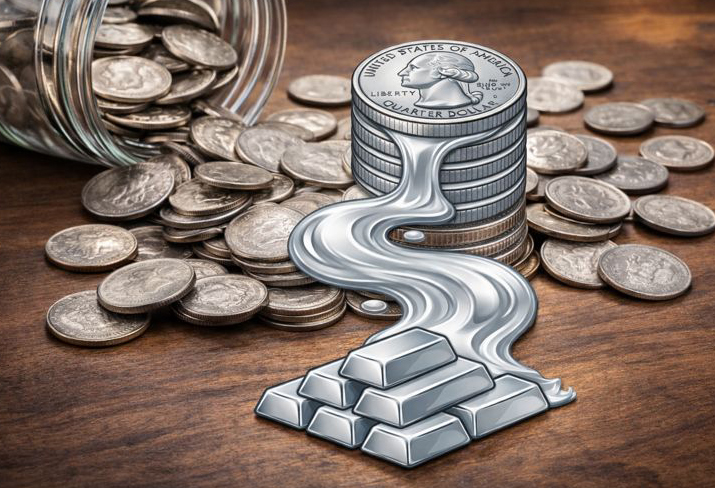
“Junk silver” refers to United States dimes, quarters, and half dollars minted before 1965. The key detail is their composition: they are all made of 90% silver. This is why the term “junk” is used: for most of these common-date coins, there is no special collector (or “numismatic”) value. Their worth is based purely on the raw silver they contain.
This high silver content means their value is tied to the price of the metal itself, not their face value as currency. For example, when silver prices are over $50 an ounce, a single pre-1965 quarter can be worth around $7 or more. You can quickly identify these valuable coins using a simple “edge test.” Look at the side of the quarter; if the edge is a solid silver or grayish color, it’s a 90% silver coin. Modern, non-silver quarters will have a distinct copper and brown stripe visible on their edge. The term “junk silver” is a powerful reminder to look past a label to find the real value underneath.
2. Watch Out for the 80% Impostor
When sorting through bags of so-called junk silver, it pays to look closely, as not all silver coins are created equal. Sometimes, other less valuable coins get mixed in. A common coin found mixed in with bags of US junk silver is the pre-1968 Canadian quarter.
The problem is that these Canadian quarters are only 80% silver, not 90%. While the difference for a single coin is small, it adds up. If you have a large number of these mixed in, you will end up with 10% less silver than you thought, resulting in a financial loss. It’s a perfect example of how, in collecting and investing, the small details can make a big difference.
 3. The Curious Case of the Painted “House Quarter”
Occasionally, you might find a pre-1965 silver quarter with a splash of paint or nail polish on its face. While it might look like damage, you can rest assured that the paint does not affect the coin’s intrinsic silver value. In fact, it tells a fascinating story from a bygone era.
These were known as “house quarters.” These coins were used by a diner or bar owner to stimulate play on a jukebox that was often owned by an external operator. When the operator came to collect and split the earnings, the paint identified the owner’s money. This allowed the operator to return those specific quarters before the revenue was divided, ensuring the bar owner wasn’t charged a commission on their own cash. This small detail transforms a simple coin into a relic of past business practices.
What Else Are We Overlooking?
As we’ve seen, ordinary-looking coins sitting in a forgotten drawer can hold significant monetary value, cautionary lessons for investors, and fascinating hidden histories. They teach us that what is commonly labeled “junk” may actually be a treasure waiting to be rediscovered. It leaves you wondering: what other everyday objects around us hold similar secrets and overlooked value?
FAQs
- What is “junk silver”?
“Junk silver” refers to U.S. dimes, quarters, and half dollars minted before 1965 that contain 90% silver. The term reflects their lack of collector rarity, not their actual value. - How can I tell if a coin is real silver?
Check the edge. Silver coins have a solid silver or gray edge, while modern coins show a visible copper stripe. This quick visual test works especially well for quarters and dimes. - Are all silver quarters worth the same amount?
No. U.S. pre-1965 quarters are 90% silver, but some Canadian quarters are only 80% silver. Mixing them together can reduce the total silver value of a group. - Does damage or paint reduce the value of junk silver?
No. Cosmetic damage, including paint or nail polish, does not affect a coin’s intrinsic silver value. As long as the coin contains silver, its melt value remains intact.