The Keats Love Letters That Vanished for 40 Years
Every so often, a story from the rare-books world reminds us why our work matters — and this one happens to land right in our backyard.
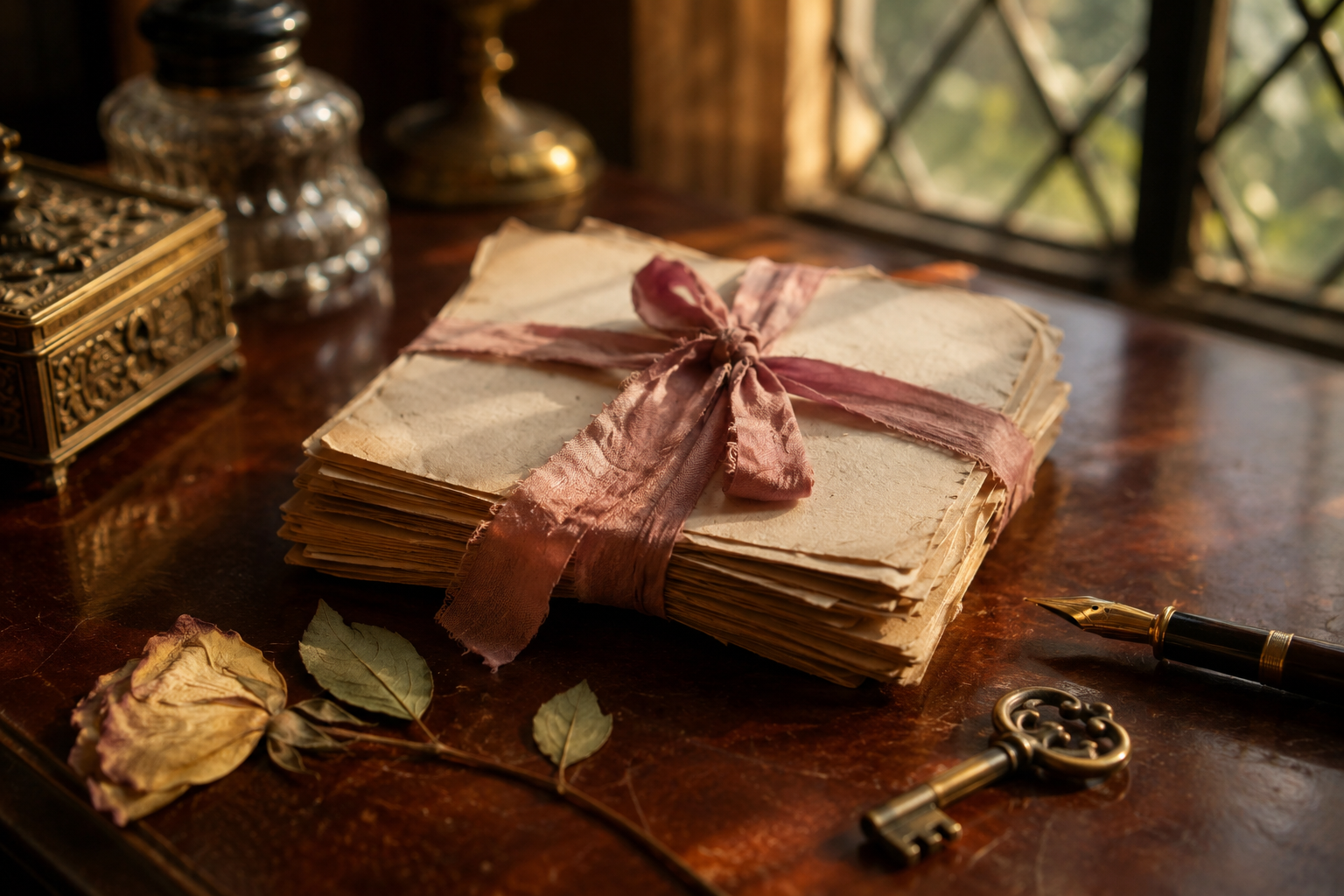
Last month, Manhattan District Attorney Alvin Bragg’s office returned 17 stolen books to the heirs of John Hay Whitney, the late publisher of the New York Herald Tribune and former U.S. ambassador to the United Kingdom. Among the volumes was a beautifully bound collection of eight handwritten love letters from the English Romantic poet John Keats to his fiancée, Fanny Brawne — a piece valued at roughly $2 million.
The letters had been missing for nearly 40 years. They were stolen, along with at least 28 other items, from the Whitney family’s estate on Long Island sometime between 1982 and 1989.
We covered the inside story on our Antique Help YouTube series — what actually happened in that Madison Avenue rare-books shop the day someone walked in with a $2 million volume and no way to prove it was theirs. Worth the three minutes if you’re curious how a moment like that unfolds in real time:
How a Young Man with No Provenance Walked Into the Wrong Shop
The recovery happened almost by accident.
Last year, a young man walked into B & B Rare Books on Madison Avenue with an unusually impressive trove of antique literature he was hoping to sell. Among his offerings was the bound Keats volume — handwritten letters, a Victorian-era frontispiece silhouette of Fanny Brawne holding a fan, the works.
When the store’s co-owners, Joshua Mann and Sunday Steinkirchner, asked how the seller had come by it, the answer was vague. The book had “been in the family.” It had “belonged to his grandfather.” But there was no documentation. No bill of sale. No record of acquisition. No chain of ownership at all.
Anyone who has spent time in this business knows that feeling — when the object in front of you is real, but the story behind it isn’t. Mann persuaded the seller to leave the volume with him so he could “establish its authenticity and set a price.” Then he started making calls. The book had been listed in the FBI’s National Stolen Art File for decades.
The rest is history — almost literally.
Why This Story Matters Beyond the Poetry
We’re antique buyers, not literary critics, but the Keats letters case is a perfect illustration of three things we talk about constantly with our own clients.
1. Provenance isn’t a formality. It’s the whole game.
The young man who walked into B & B Rare Books had a multimillion-dollar object in his hands. What he didn’t have was the one thing that could turn it into money: a verifiable history of ownership. Without that paper trail, no legitimate dealer or auction house can — or should — touch it. We see this on a smaller scale every week, when a family inherits jewelry, silver, art, or rare books and has no idea where the pieces originally came from. The value is often still there, but proving it is harder, and selling it cleanly takes more work.
2. Things disappear. Things come back. The market has a long memory.
These letters sat somewhere — a drawer, a safe, a closet — for close to four decades. Whoever ended up with them likely had no idea what they were looking at, or where they really came from. That happens more often than people realize. We’ve walked into countless homes on Long Island and found objects that the homeowners assumed were worthless, or assumed were genuine when they weren’t, or had no idea their grandparents had ever owned. A trained eye changes the picture.
3. The right buyer makes all the difference.
As we said in the video, sometimes doing the right thing means walking away. Joshua and Sunday could have looked the other way. The volume was extraordinary, the seller was eager, and there was real money on the table — over $2 million worth of it. Instead, he and his team did the careful, slow, ethical thing, and the letters are now back where they belong, headed (eventually) to a public auction where they can be properly placed in a collection or institution. That’s the difference between a buyer who’s in it for the quick flip and one who treats objects like the historical artifacts they actually are.
A Quick Note on Keats and Fanny
For anyone unfamiliar with the love story behind the letters: Keats met Fanny Brawne in 1818, when he was 23 and she was 18. He wrote her around 40 letters between 1819 and 1820, full of an almost embarrassing tenderness — “I almost wish we were butterflies and lived but three summer days. Three such days with you I could fill with more delight than fifty common years.”
He died of tuberculosis in Rome in 1821 at the age of 25. Fanny kept his letters her entire life. After her death in 1865, her children sold them at auction in 1885 — prompting Oscar Wilde to publish a scathing little poem about the bidders (“I think they love not art”). Eventually the volume found its way into John Hay Whitney’s celebrated private library on Long Island, where it remained until someone walked off with it in the 1980s.
The Long Island Connection
What struck us most about this story isn’t just the romance, or the dollar figure, or even the FBI involvement. It’s that an object of this magnitude — a piece of literary history that scholars have studied for over a century — sat on a Long Island estate, was stolen, vanished for a generation, and almost slipped back onto the market through a casual walk-in sale.
We work with Long Island families every week. Some have museum-quality collections they don’t fully realize they’re sitting on. Others have inherited items they’re certain are valuable but turn out not to be. Either way, the lesson is the same: know what you have, document where it came from, and work with someone who will tell you the truth — even when the truth costs them a sale.
If you have art, books, jewelry, silver, or antiques and you’re not sure what’s in front of you, that’s exactly the kind of call we love to get. We offer free in-home appraisals throughout New York City and Long Island, and we’ve been doing this for over 40 years.
Sometimes the most ordinary-looking drawer in the most ordinary-looking house contains something extraordinary. Sometimes it doesn’t. But you should know which one you have.
FAQs
How much are the recovered Keats letters worth?
Roughly $2 million. The Whitney family heirs are expected to send the volume back to auction.
What is “provenance” and why does it matter so much?
Provenance is the documented chain of ownership for an object — who bought it, who inherited it, when it changed hands. Without it, even authentic pieces can be hard to sell at full value, because the burden of proof shifts to you.
I inherited some old letters, manuscripts, or rare books. How do I find out if they’re valuable?
Don’t throw anything away, and don’t try to clean or “restore” anything. Call in a professional for an honest appraisal before you make any decisions.
What if I own something valuable but I don’t have any paperwork on where it came from?
More common than people think. A good dealer can often help reconstruct a reasonable history through estate records, old photos, auction catalogs, and physical evidence on the piece itself.
How would I know if something I own had been stolen at some point?
The FBI’s National Stolen Art File and the Art Loss Register track high-value items; the Antiquarian Booksellers’ Association of America covers books and manuscripts. A reputable buyer will check these as a matter of course.
Does Syl-Lee Antiques buy rare books, letters, and manuscripts?
Yes — along with fine art, jewelry, silver, watches, antiques, and full estates. Free in-home appraisals throughout NYC and Long Island. Call (212) 366-9466 or email contact@syl-leeantiques.com.
Sources: The New York Times