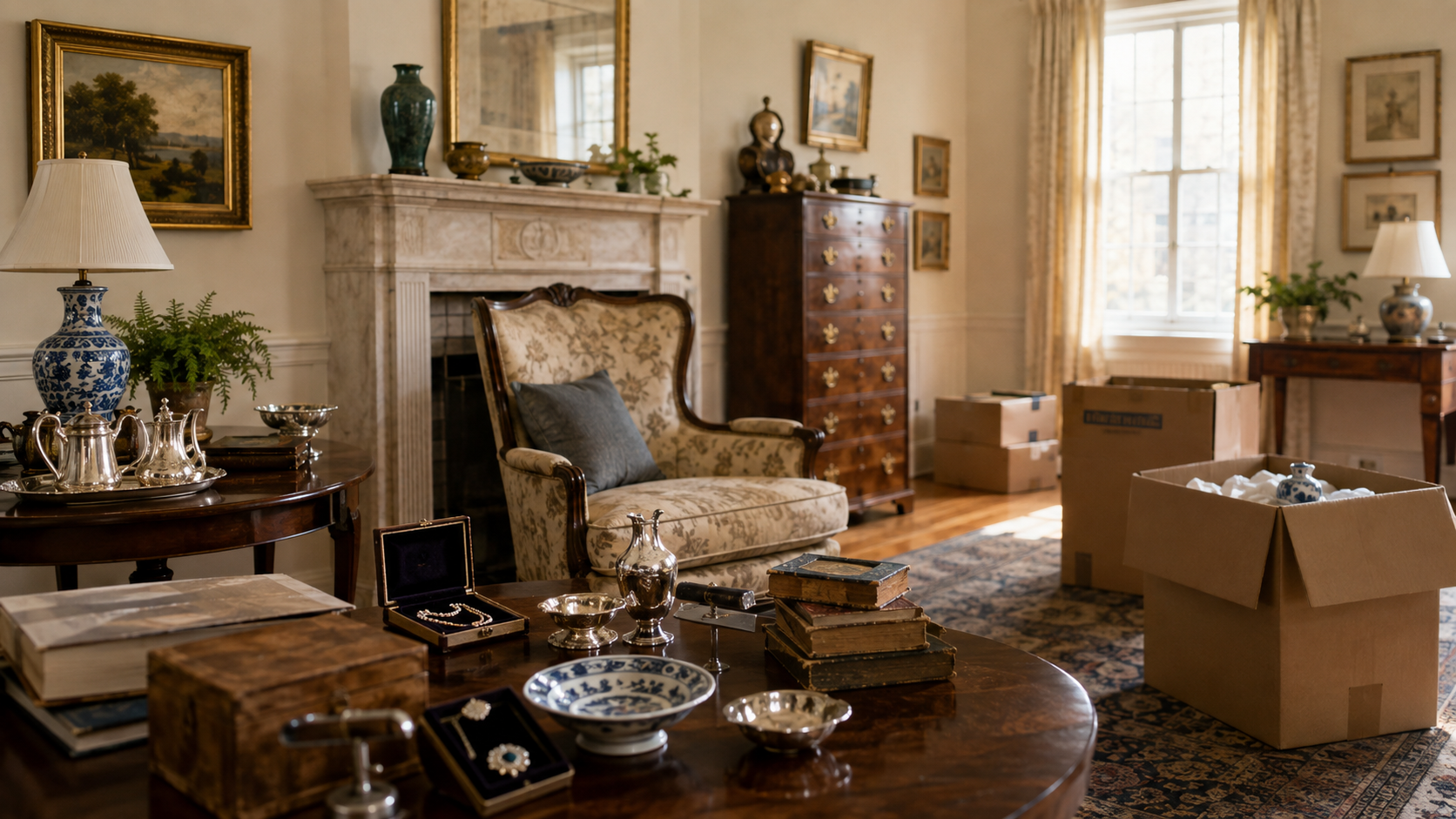
Downsizing a home, inheriting a collection, or clearing a loved one’s estate can be physically exhausting and emotionally overwhelming. It can also become unnecessarily expensive if valuable antiques, jewelry, artwork, or collectibles are mishandled along the way.
Most people do not regularly sell antiques. They may have no idea which objects are valuable, which markets are currently strong, or whom they can trust. Under pressure to empty a home, it is easy to make decisions that cannot be undone.
Before donating, discarding, cleaning, repairing, moving, or selling anything, avoid these seven common mistakes.
1. Throwing Things Away Before Having Them Evaluated
One of the costliest mistakes is beginning with a dumpster.
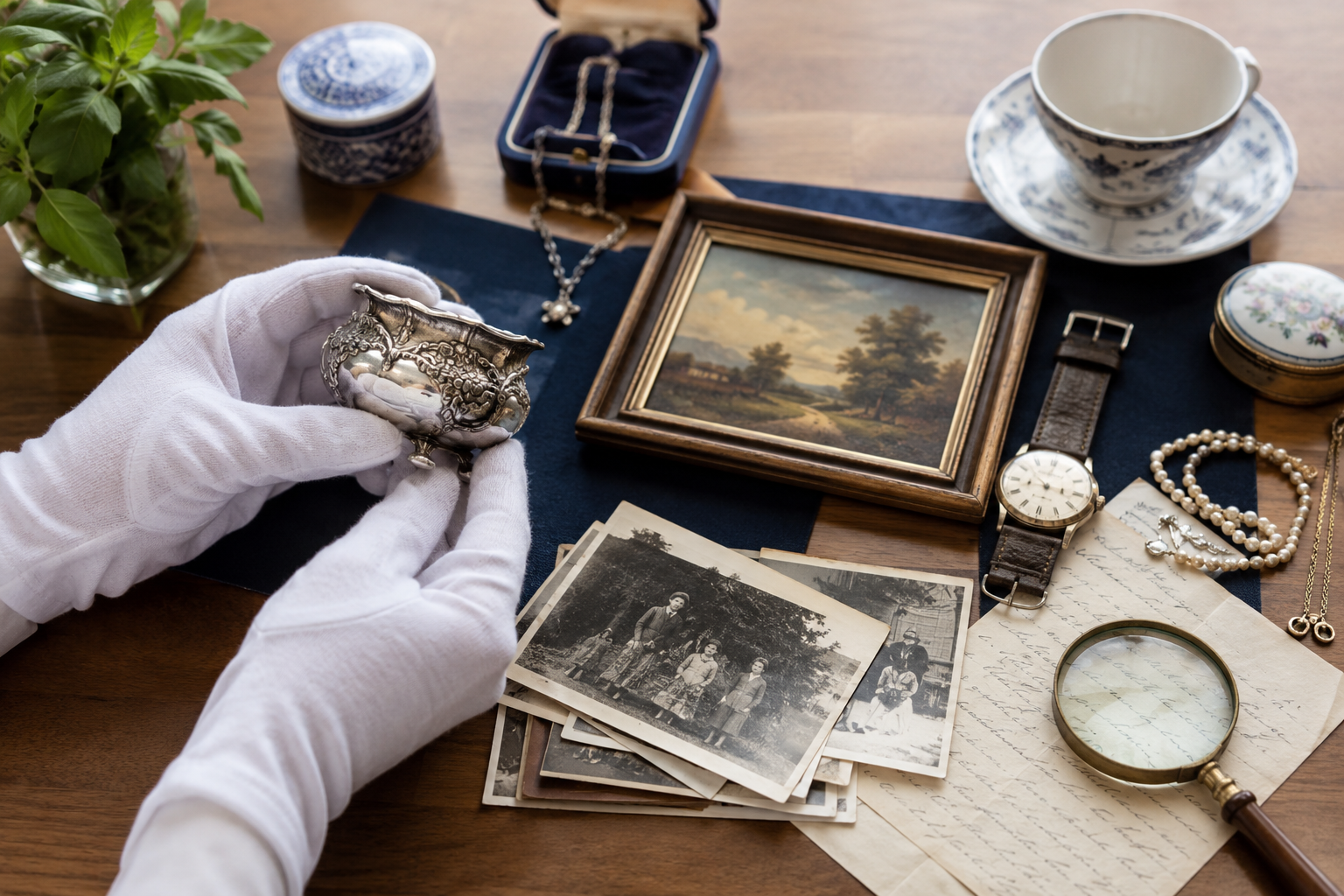
Items that look old-fashioned, damaged, tarnished, incomplete, or simply unfamiliar may still have considerable resale value. Jewelry can be valuable because of its gold content, gemstones, maker, or design. A dark or dirty painting may have a recognizable artist’s signature. Boxes of papers may contain rare books, photographs, letters, or historically important material.
Even objects with little decorative appeal today can be valuable to specialized collectors.
A better approach: Separate obvious household trash, but do not discard unfamiliar artwork, jewelry, silver, watches, ceramics, books, documents, or decorative objects until someone knowledgeable has reviewed them.
2. Assuming That “Old” Automatically Means Valuable
Age alone does not determine value.
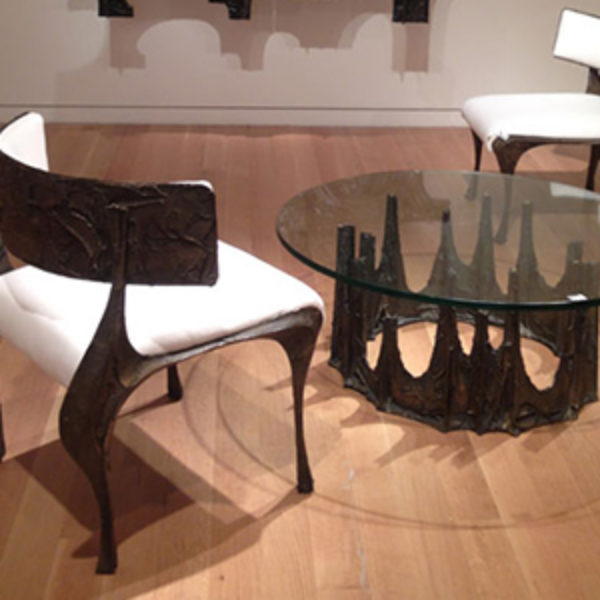
Many mass-produced objects from the late 19th and early 20th centuries have limited demand today. Meanwhile, certain examples of mid-century furniture, modern art, designer lighting, vintage watches, studio ceramics, and 20th-century jewelry can command strong prices—even though they may not technically be antiques.
Value is usually shaped by a combination of factors, including:
- Maker or artist
- Rarity
- Condition
- Materials
- Provenance
- Current buyer demand
- The best market and method for selling the item
A better approach: Do not decide what deserves attention based solely on age, appearance, or family lore.
3. Cleaning, Polishing, or Repairing Items Before Seeking Advice
Trying to make an object look more presentable can sometimes reduce its value.
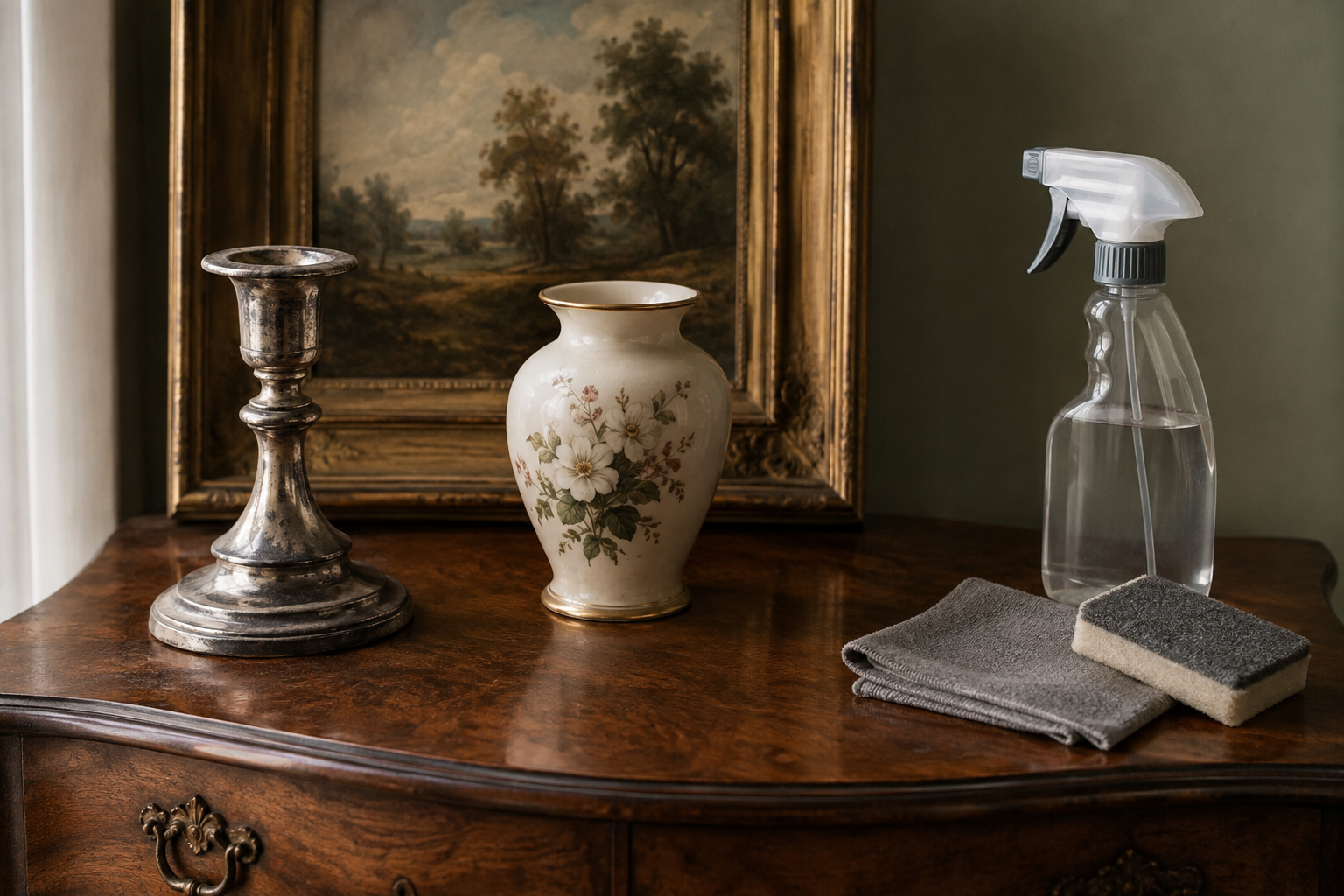
Aggressive polishing may remove an original surface or patina. Household cleaners can damage paintings, metal, wood, porcelain, or textiles. Replacing hardware, repainting furniture, reframing artwork, or repairing ceramics may also alter details that help establish authenticity.
A well-intentioned restoration can cost more than it adds—or make an object less appealing to serious buyers.
A better approach: Leave potentially valuable items in their current condition. Photograph any damage and ask a qualified professional whether cleaning or restoration is advisable.
Take the Guesswork Out of the Process
If you are preparing to downsize, settle an estate, or decide what to do with inherited possessions, the Antique Help course will help you understand what deserves further research, what questions to ask, and how to approach potential buyers more confidently.
4. Relying on Asking Prices Instead of Actual Sales
Online research can be useful, but it frequently creates unrealistic expectations.
The price listed on an online marketplace is only what a seller hopes to receive. It does not tell you whether the item sold—or whether it has remained unsold for years. Two objects that appear similar in photographs may also differ significantly in maker, age, size, condition, materials, or authenticity.
Insurance appraisals can cause additional confusion because they generally reflect retail replacement costs, not the amount an owner should expect to receive when selling.
A better approach: Research documented sales of genuinely comparable objects and have an experienced professional explain how those results apply to your particular item.
5. Sending Everything to the Same Buyer or Auction House
No dealer, auction house, or estate-sale company is the best outlet for every category.
A general auction may not have the right audience for specialized jewelry, Asian art, modern design, rare books, or important paintings. An estate sale may work well for ordinary household contents but may not expose a significant item to the collectors most likely to pay its true market value.
Some items are best sold directly to a specialist. Others belong at auction. Lower-value household contents may be appropriate for an estate sale, donation, or cleanout.
A better approach: Sort the estate by category and potential value before deciding how and where each group of items should be sold.
6. Losing the History That Accompanies the Objects
Do not separate objects from the documents, labels, receipts, photographs, or stories that help identify them.
Provenance—the documented history of an object’s ownership—can support attribution, authenticity, and value. An old gallery label, purchase receipt, exhibition catalog, photograph of the piece in a family home, or letter from the artist may be important.
Unfortunately, these materials are often discarded because they appear to be ordinary paperwork.
A better approach: Keep related documents together. Photograph labels, signatures, marks, inscriptions, and damaged areas. Record what the family knows while relatives or previous owners are still available to provide information.
7. Making Decisions Under Unnecessary Time Pressure
Executors and families are frequently working against deadlines. A home may need to be sold, an apartment surrendered, or possessions divided among heirs. That urgency can lead to rushed decisions and disagreements.
Accepting the first offer is not always a mistake, particularly when speed and convenience matter. But it should be an informed choice—not the result of having waited until the final week to determine what is in the home.
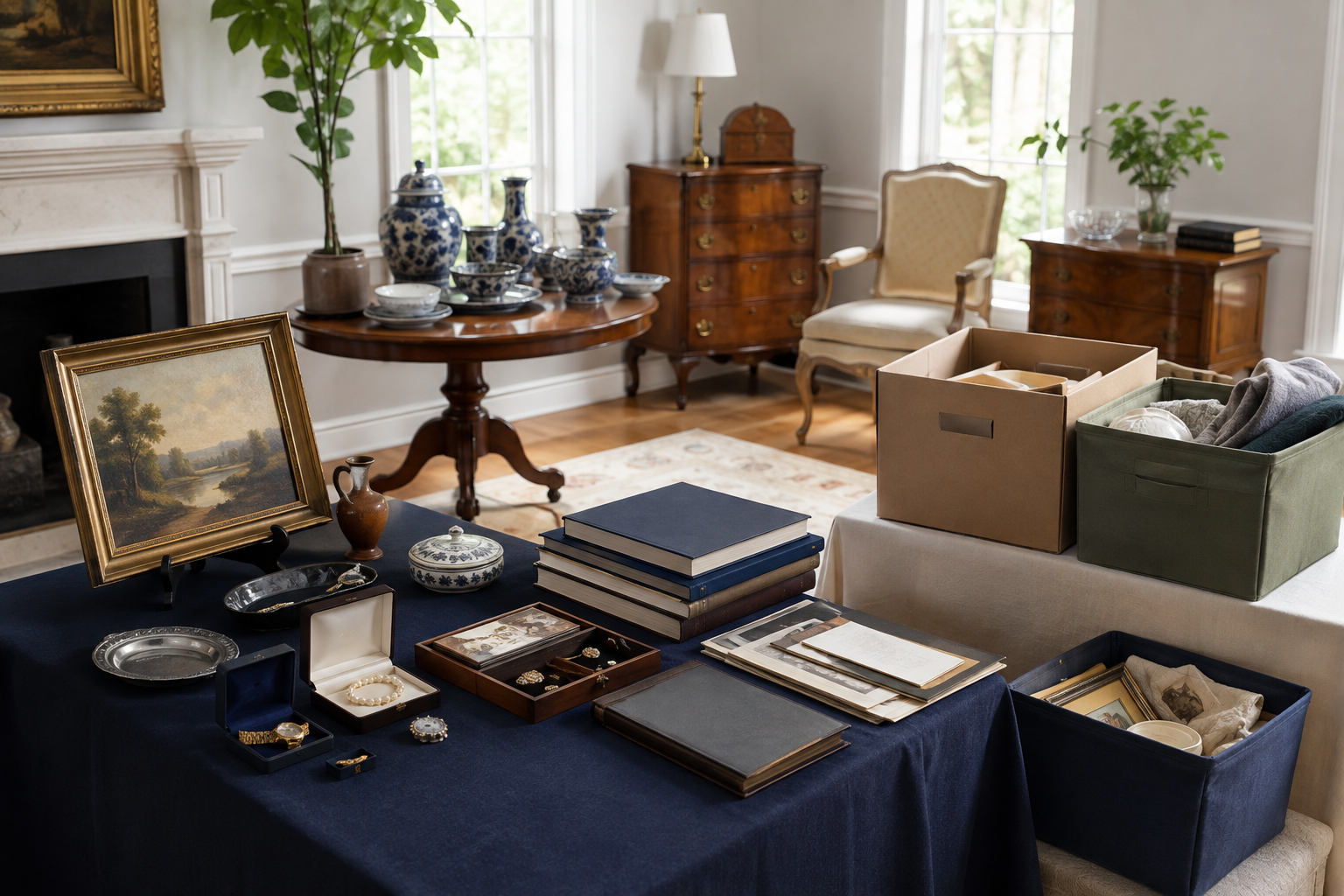
A better approach: Begin the evaluation process as early as possible. Identify which objects family members want, which may have resale value, and which can be donated or discarded. A staged approach makes the process more manageable and helps protect important items from being overlooked.
A Thoughtful Process Protects More Than Financial Value
Downsizing and estate liquidation are not only financial transactions. The objects involved may represent family history, personal identity, travel, relationships, or a lifetime of collecting.
The goal is not to treat every possession as a hidden treasure. It is to understand what you have before deciding what should happen to it.
By slowing down long enough to identify important objects, preserve their histories, and select the right selling method, you can avoid costly mistakes—and move forward with greater confidence.
Read the Book
Learn how to identify what may have resale value, research realistic prices, and approach the antique-selling process with greater confidence.
Antique Help provides a practical foundation for downsizers, heirs, executors, and families who need to make informed decisions about antiques, jewelry, art, and inherited possessions.
Listen to the Audiobook
Prefer to listen? Take Antique Help with you while sorting, organizing, traveling, or preparing to clear an estate.
The audiobook explains the antique resale process in straightforward language so you can make better decisions without becoming intimidated or overwhelmed.
FAQs
How do I know which inherited items might be valuable?
Start with objects that have signatures, maker’s marks, labels, receipts, precious-metal markings, unusual materials, or a known family history. Fine art, jewelry, watches, silver, designer furniture, rare books, ceramics, and Asian antiques are generally worth reviewing before they are discarded or donated.
Should I have the entire estate formally appraised?
Not necessarily. A preliminary evaluation can help identify which items justify a formal appraisal. A written appraisal may be needed for estate-tax, insurance, charitable-donation, or equitable-distribution purposes, while someone planning to sell primarily needs realistic guidance about current resale value.
Is an estate sale the best way to sell antiques?
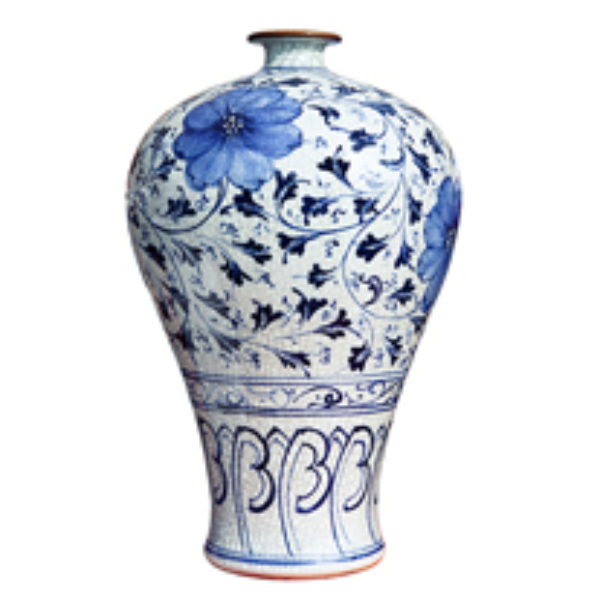
It depends on the contents of the home. Estate sales can be effective for selling a large volume of household items, but specialized or high-value objects may perform better through an appropriate dealer, specialist, or auction house.
Should I repair damaged antiques before selling them?
Usually not without professional advice. Restoration may be expensive, and an inappropriate repair can reduce an object’s value. Buyers may prefer to inspect the item in its original condition and decide how—or whether—it should be restored.
What should I do first when clearing a family estate?
Secure the property and important documents, remove items specifically bequeathed to heirs, photograph the rooms and contents, and arrange an evaluation before hiring a cleanout company. Do not begin with indiscriminate disposal.
Ready to Discuss Your Antiques?
Syl-Lee Antiques serves sellers throughout New York City, Long Island, Westchester, New Jersey, and Connecticut.
Call (212) 366-9466 to schedule a complimentary in-home evaluation, or contact Syl-Lee Antiques online.