Artificial intelligence is everywhere these days—from writing poetry to recommending recipes—and now, it’s making its way into the world of antiques. Whether you’re curious about the history of a family heirloom or trying to figure out what that market stall “treasure” might be worth, AI tools can give you fast, detailed answers. But like with any tool, it’s important to understand both the pros and the cons before relying on them.
The Pros of Using AI for Antiques
- Instant access to information: AI can analyze text and images to identify patterns, styles, and makers, then give you background details you might not have known. In seconds, it can tell you what style of pottery you have or where that silver hallmark originated.
- A starting point for research: AI is certainly a fine way to get started—especially for identifying images, understanding design styles, and learning historical context. It can help you figure out the right keywords to search and give you the background you need to talk to experts.
- Learning on the go: Curious about antique furniture types while browsing a flea market? AI tools can give you quick history lessons and tell you what to look for in terms of quality, authenticity, or period style.
The Cons (and Cautions)
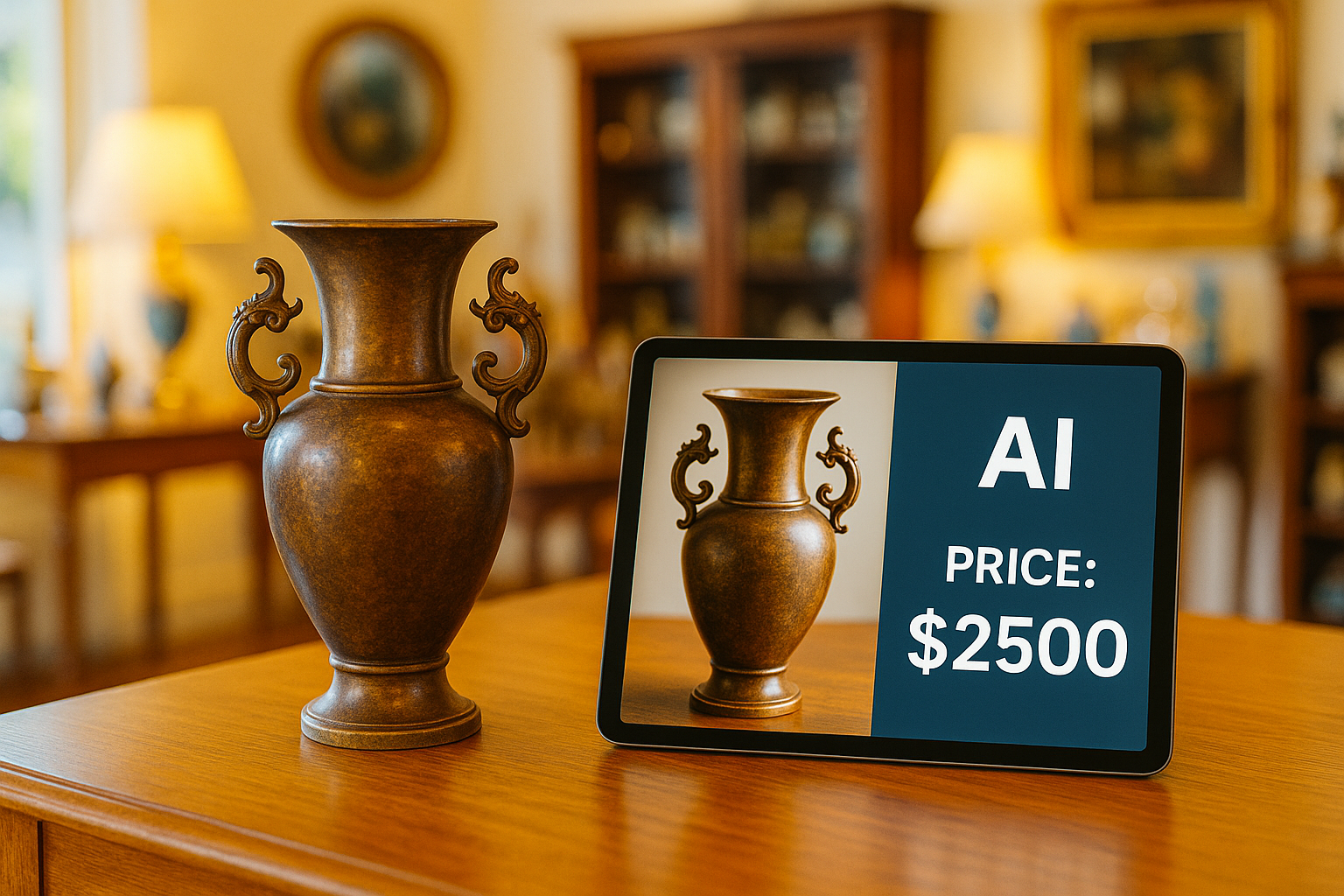
- “Retail prices” vs. “what you can actually sell it for”: Here’s the big one: AI will often give you retail prices. These are what dealers might ask in a shop, at a show, or online—not the price you’d necessarily get selling your own item. In the antiques world, what you can buy something for is often very different from what you can sell it for. As a rule of thumb, the selling price to a dealer or at auction is often 30–50% (or more) lower than retail.
- Hallucinations: In AI-speak, a “hallucination” is when the system confidently makes up an answer that’s not actually true. That “19th-century Venetian desk” might actually be a 1970s reproduction, but if AI gets it wrong, it may sound completely believable. Always confirm with multiple sources—or better yet, an experienced dealer.
- Lack of context: AI can’t always see the subtle details a trained eye will catch—like a small repair, replaced parts, or slight differences in craftsmanship that can significantly affect value.
- Market blind spots: Antique pricing is heavily influenced by local demand, current trends, and condition. AI can’t fully predict those shifts, and what’s popular online might not sell in your area.
Bottom Line
AI is a great place to start your antique research—especially for identifying images and gathering background information. But it’s not the final authority. For an accurate assessment of what your item is worth (if anything), how much it’s likely to sell for, and whether you should keep it or sell it, you’ll need to call in a professional. The human touch is still the gold standard in the antiques world.